‘Newstalgia’ is the design world’s answer to our growing desire for familiarity. It takes nostalgic references – vintage furniture, traditional patterns, timeworn materials, beloved colors, and design details from the past – and mixes them with contemporary pieces and modern ways of living. Rather than recreating a particular decade or making a room feel like a time capsule, the idea is to take the elements we remember and love and give them a fresh, more livable interpretation.
Joanna Gaines’ Lake House living room is a particularly compelling example of the interior design trend for nostalgic decorating. Instead of relying on the cool, pared-back neutrals that have dominated interiors in recent years, she creates a warmer, more layered scheme using earth tones, rich woods, vintage-inspired pieces, and tactile materials.
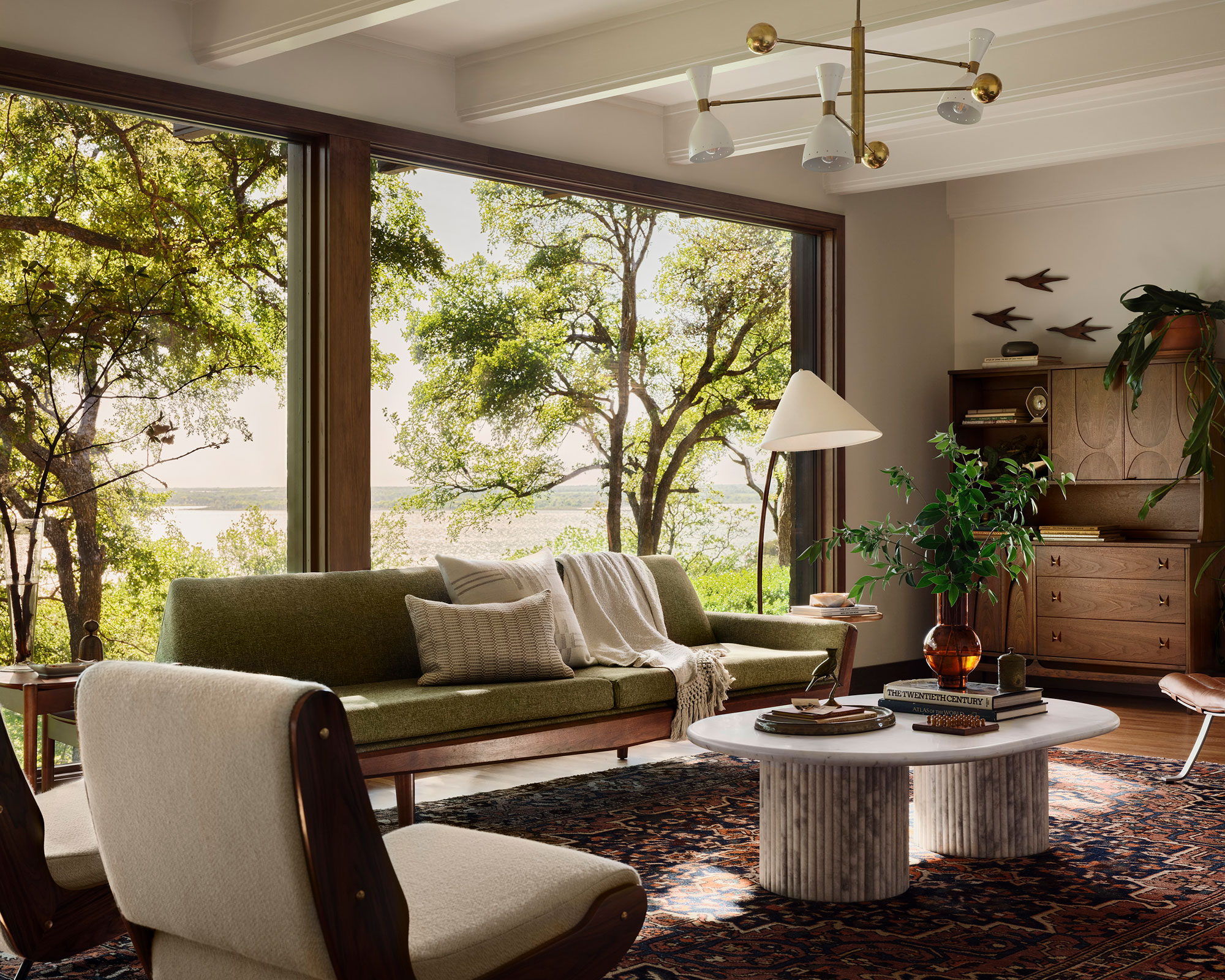
The starting point is color. Terracotta, olive, honeyed walnut, and cognac leather work together to give this light-filled room a sense of depth and warmth without making it feel heavy. Rather than treating neutrals as pale shades of white, gray, or beige, Gaines looks to the landscape around Lake Waco for a more soulful interpretation – one that feels organic, lived-in, and deeply inviting.
This is an important part of the newstalgia movement: color is being used to create an emotional response. After years of cool grays, stark whites, and minimalist interiors, there is a growing appetite for rooms that feel comforting and familiar. Earthy colors have an inherently nostalgic quality, particularly when paired with natural materials and finishes that develop character over time.
The room still has plenty of the clean lines and organic forms associated with mid-century modern design, but they are softened by this warmer palette. The effect is less ‘retro’ and more relaxed: a home that feels collected, comfortable, and connected to its surroundings.
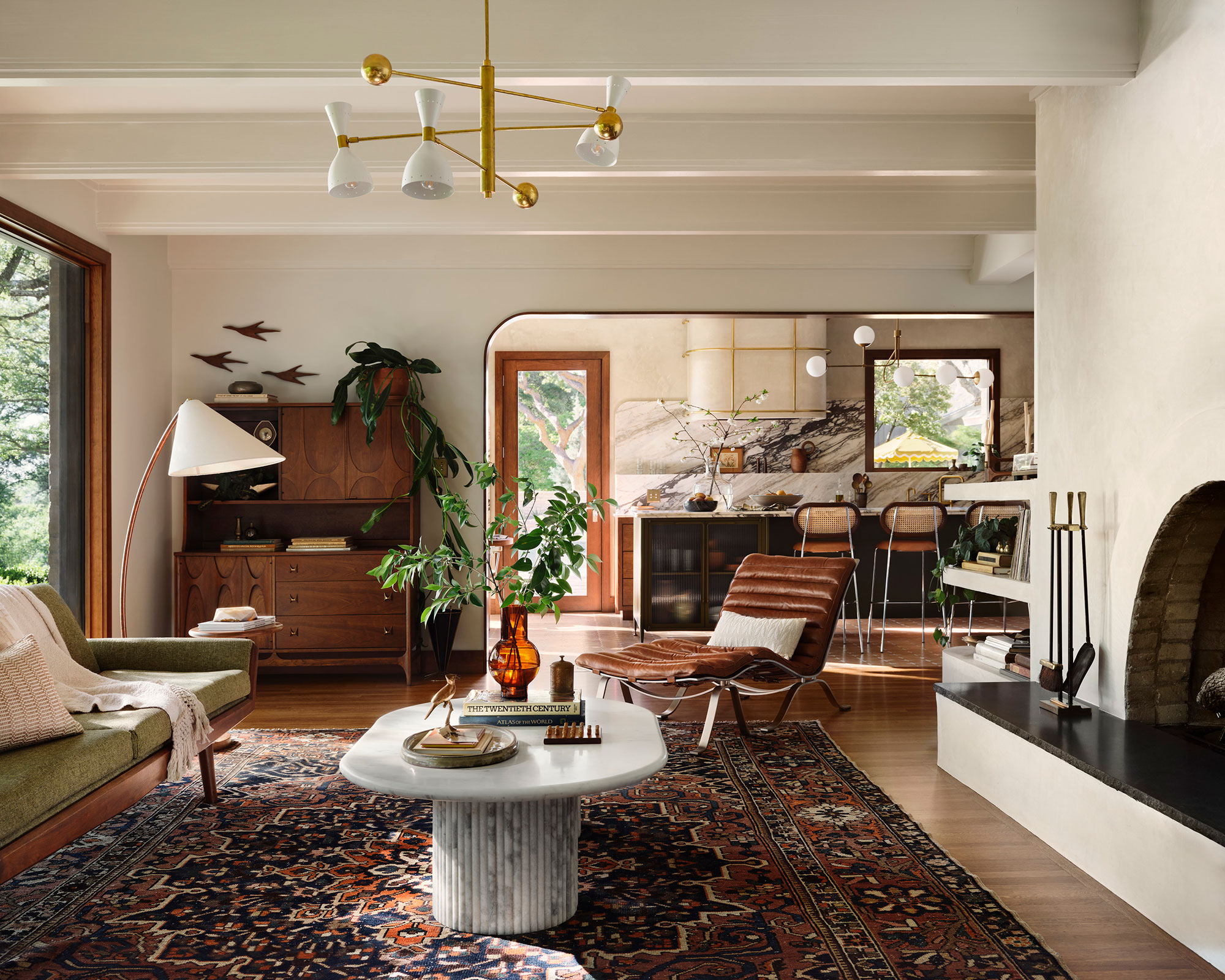
For the Lake House renovation, the Gaineses were careful to work with the original character of the 1965 property rather than stripping it back entirely. The home’s original mid-century modern bones were combined with Spanish Revival influences, including arches, curves, plaster walls, and terracotta tiles. These architectural details bring softness and texture to the more streamlined furniture.
Wood plays an equally important role. Rich timber appears across the flooring, window trim, and credenza, creating a continuous thread of warmth throughout the room. The key is that Gaines doesn’t use just one wood finish in isolation; different tones are layered together, giving the space depth and a sense of history without making it feel dark.
Design expertise in your inbox – from inspiring decorating ideas and beautiful celebrity homes to practical gardening advice and shopping round-ups.
That layered approach is central to newstalgia. It is not about perfectly matching a vintage aesthetic. Instead, it is about combining old and new, polished and patinated, familiar and unexpected. A modern sofa can sit alongside an antique piece; a streamlined mid-century silhouette can be softened by a traditional rug. The contrast is what makes the look feel current.
The vintage Persian rug is another important piece of the puzzle. Its faded tones and traditional pattern provide a grounding contrast to the cleaner lines of the furniture, adding the kind of visual history that can be difficult to achieve with entirely new pieces. It also helps pull together the room’s earthy palette, reinforcing those warm terracotta, brown, and ocher notes.
The furniture follows the same philosophy. Mid-century-inspired silhouettes bring structure, while curved forms and cognac leather make the room feel softer and more tactile. Rather than allowing the style to become overly polished or formal, Gaines uses natural materials, rounded shapes, and vintage-inspired pieces to make it feel made for living.
This is why I predict we’ll be seeing much more of this approach in 2027. As nostalgia continues to influence everything from fashion to interiors, I expect our homes to become warmer, more personal, and more rooted in the past – but without becoming overtly retro. Newstalgia offers a way to embrace that desire for familiarity while still creating a home that feels fresh and contemporary.
There is also something particularly timely about the trend. In an increasingly digital world, interiors that celebrate craftsmanship, natural materials, patina, and pieces with a sense of history can offer a feeling of permanence. Newstalgia allows us to surround ourselves with things that feel meaningful and familiar, while still leaving room for modern design.
If the interior design world is moving away from cool minimalism, this could be the blueprint for 2027: less stark, more soulful, and rooted in the materials, colors, and memories that make a house feel like home.