Typically, discord is seen as a bad thing. However, in the world of interior design, when done right, a space that conflicts can be a thing of beauty. A room filled with clashes, contradictions, and contrasts might sound like chaos, but even the busiest spaces can hold a quiet harmony and cohesion; it's all down to the right technique.
Decorating with pattern is all about finding common ground. While traditional and modern prints can feel like worlds apart, their differences are what make them shine when paired together. But how do you mix patterns in a room without making your home feel busy? Designers say it lies in these five steps.
'I think the key is not to make everything work perfectly together,' explains interior designer Elizabeth Hay. 'I love rooms that feel as though they have evolved over time, and mixing a more traditional floral with something graphic or geometric is a great way of stopping a scheme from feeling too predictable or overly decorated. For me, the most interesting interiors are always a mixture – different periods, different places, and different styles all layered together rather than everything belonging to one particular look.'
1. Find a Theme
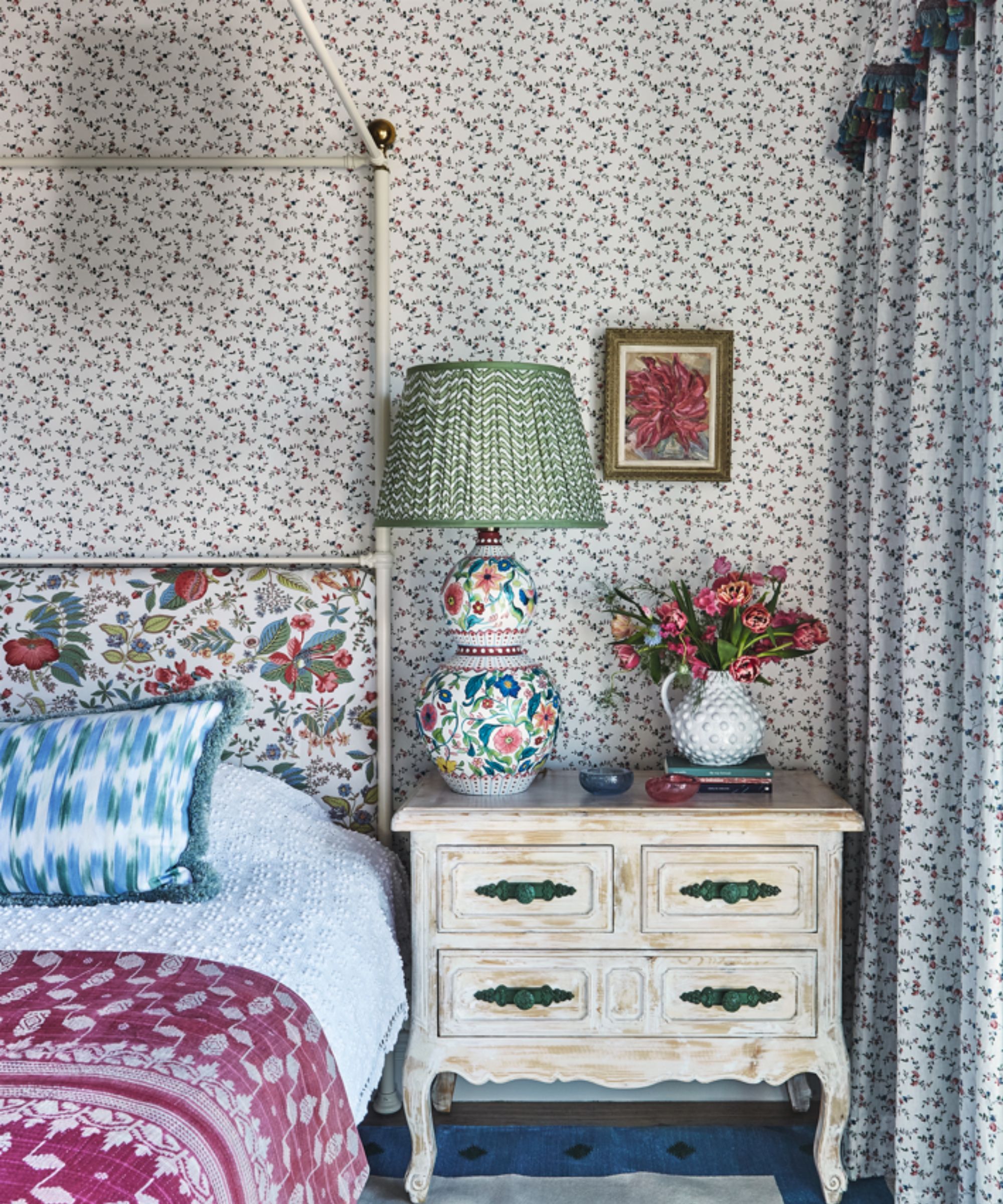
First, find a 'theme'. Choose prints, not matter how different in style or era, that share common ground through their motifs, such as a botanical floral wallpaper and ditsy drapes or a striped armchair paired with a geometric throw.
'Mixing modern and traditional patterns can feel intimidating, but it is one of the most rewarding ways to create an interior full of character,' explains interior designer Kit Kemp. 'I always begin with a story or theme, as this helps bring even the most contrasting patterns together and gives a room a sense of purpose.'
'Start with a pattern you love and let it anchor your scheme, then layer patterns in different scales, pairing large, expressive prints with more intricate designs. Balance is essential; introducing plains or quieter patterns gives the eye space to rest and allows the statement pieces to shine. To make even the most disparate patterns feel intentional, introduce a common thread, a shared color, motif, or shape, to weave throughout the space. These subtle connections create a sense of harmony, allowing even the boldest designs to feel purposeful, balanced, and beautifully considered. Sticking to a theme will unify the different elements, creating a captivating narrative.'
2. Vary the Scale
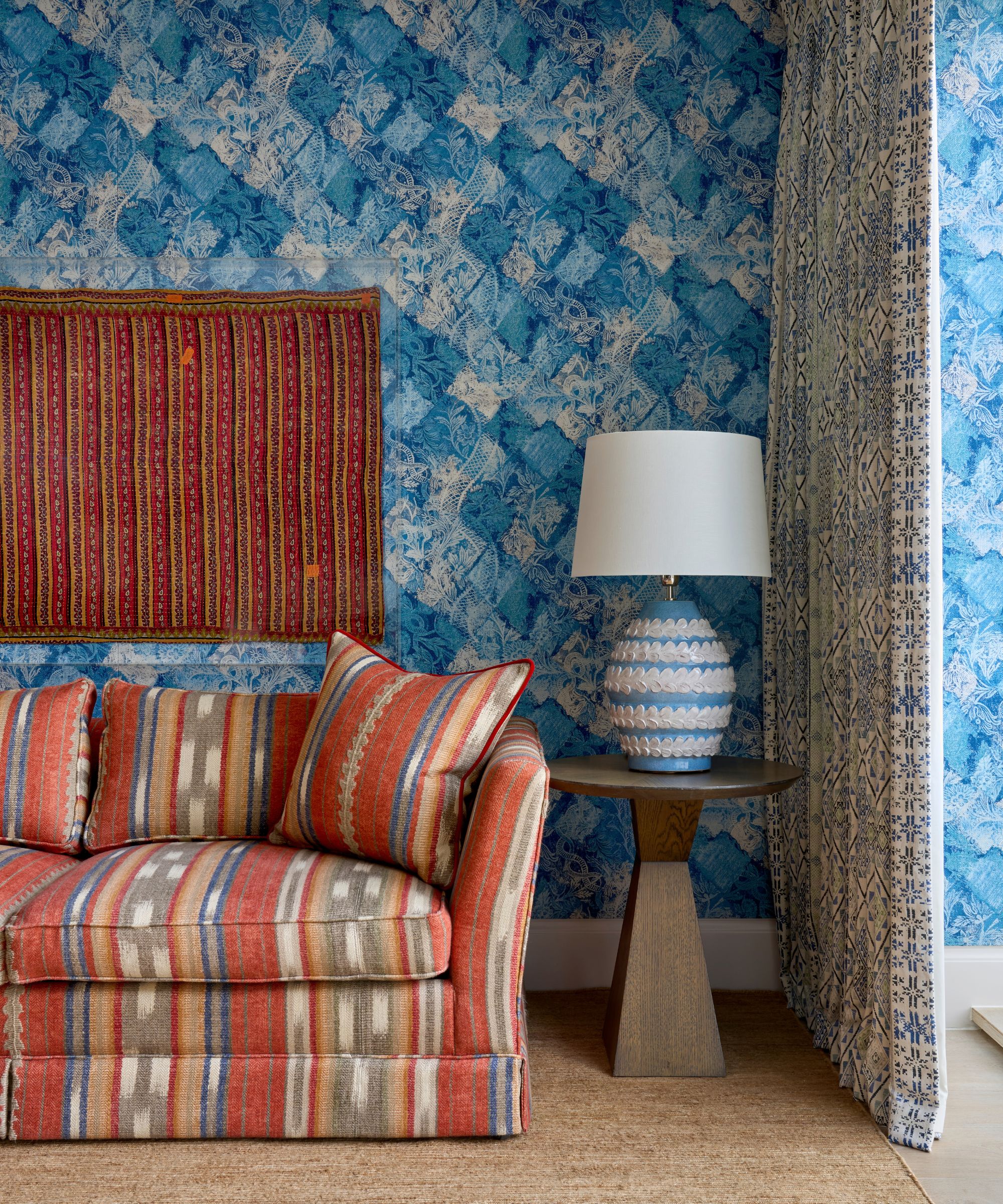
'One of the secrets to mixing patterns from different eras successfully is varying the scale,' says Kit. 'Pair large, bold designs with smaller-scale, more intricate patterns. For instance, complement a large-scale traditional floral wallpaper or scenic mural design with sofas and armchairs in geometric prints or woven stripes.'
Design expertise in your inbox – from inspiring decorating ideas and beautiful celebrity homes to practical gardening advice and shopping round-ups.
'And where you love two patterns but aren’t convinced they should interact, create visual space with a plain border. This is a fantastic device for framing a headboard or adding a leading edge in solid color to curtains, allowing the eye to pause and give each pattern space to breathe.'
'Scale is really important,' agrees Elizabeth. 'If I’m using a busy, small-scale floral, I might pair it with a much bolder stripe, check or geometric so that the patterns aren’t fighting for attention. I also like varying the density of patterns – something loose and organic next to something more structured.'
3. Make Color the Common Ground
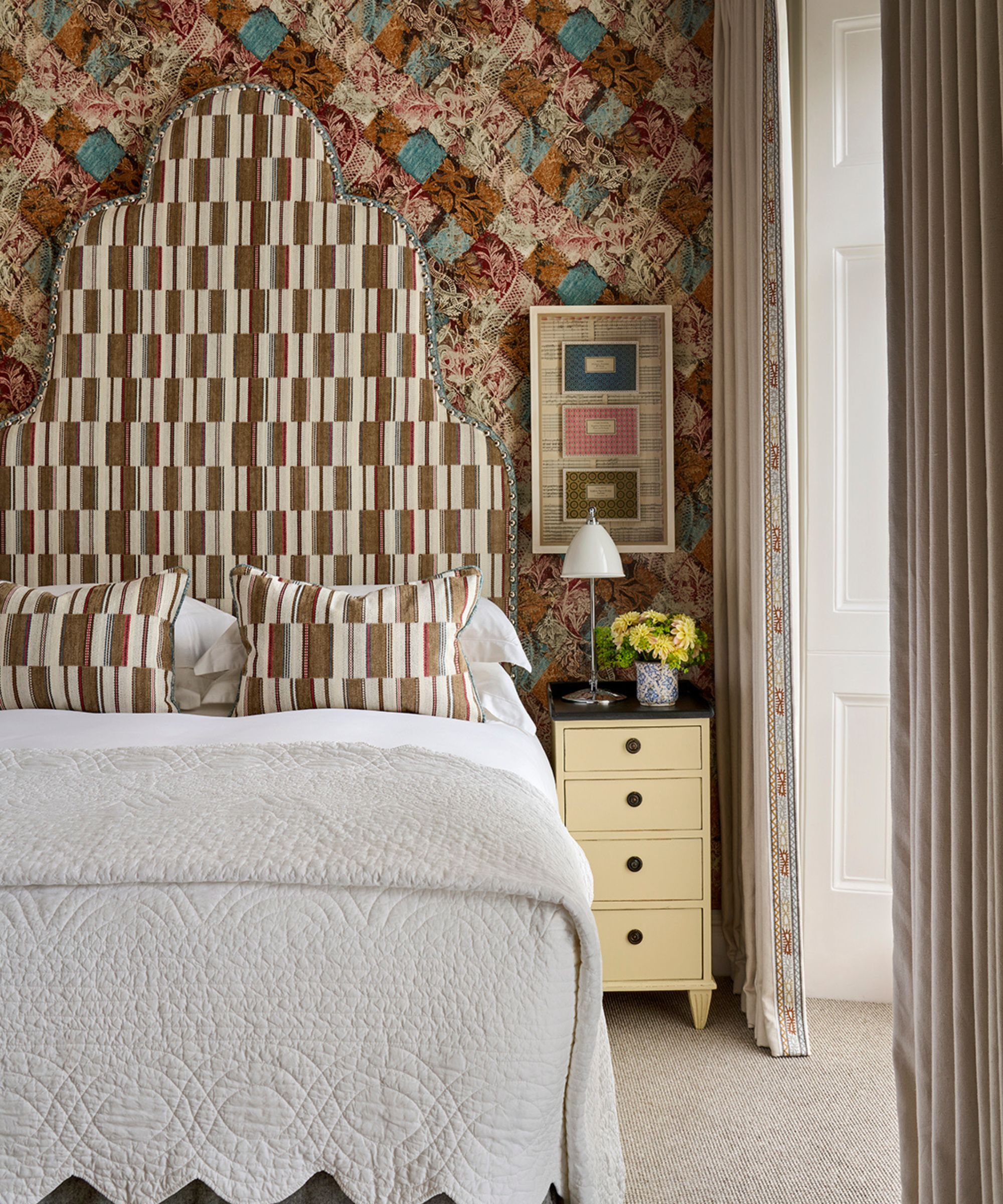
'Color is usually the thread that pulls everything together for me,' Elizabeth says. 'When mixing a lot of patterns, color is key. The colors have to tone perfectly in order for all of the pattern not to feel too busy. I will often pick up a color from one fabric somewhere else in the room.'
While the idea of a plaid fabric beside a floral might sound like a bold contrast, some of the best pattern pairings for fall work because they share common colors. 'I tend to think about the room as a whole rather than whether two individual fabrics technically “match”,' she adds. 'You might have a floral curtain, a geometric cushion and a striped chair that look quite different in isolation, but if the colors, scale and overall balance of the room feel right, they can sit very happily together. I think a little bit of discord can actually make a room much more interesting.'
4. Use a Neutral Base
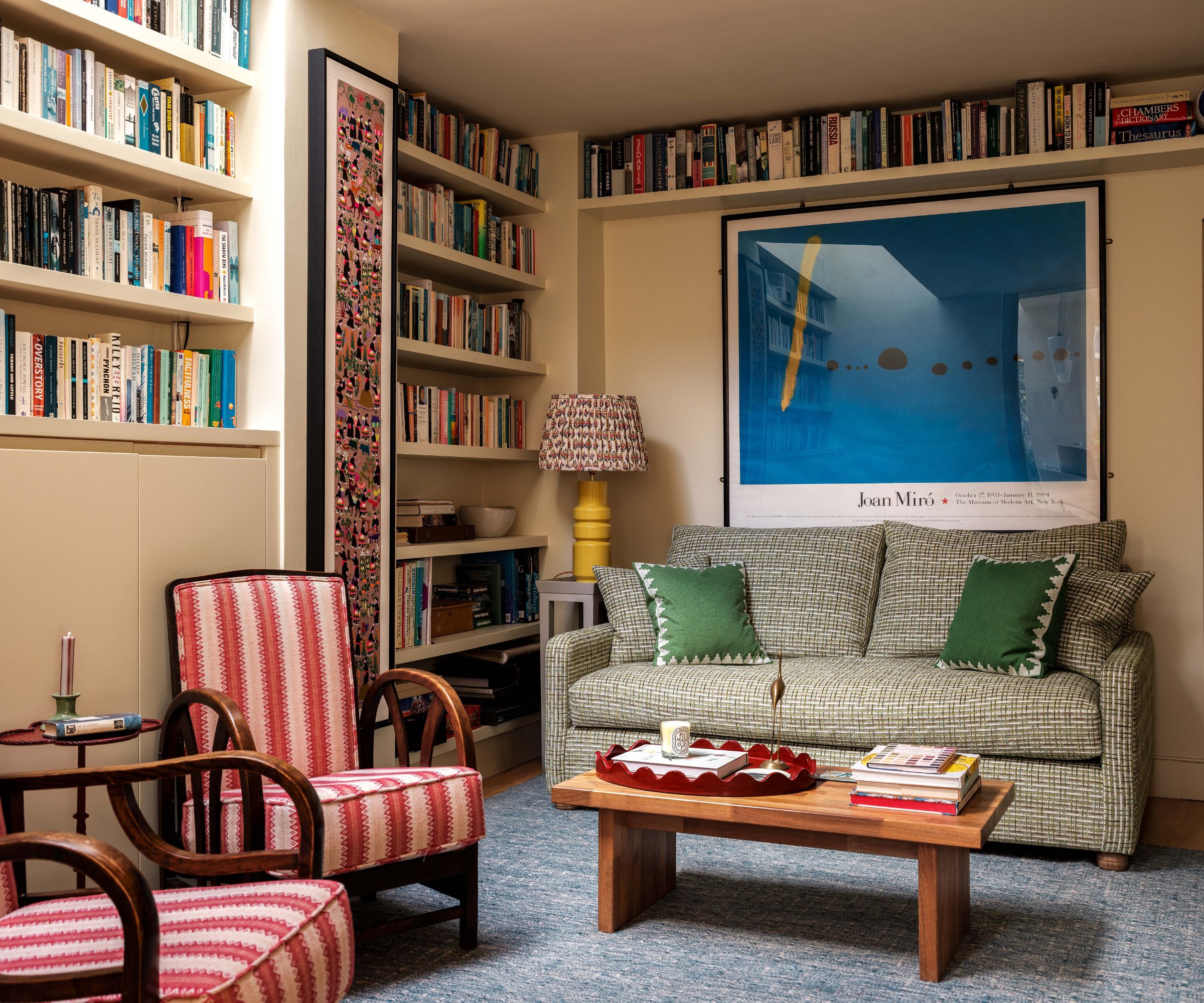
A warm neutral paint or subtle wallpaper can work as an excellent base when you are mixing old and new prints. With a level starting point, you can be more adventurous with the patterns you layer on top. For example, a striking pink Ikat headboard would beautifully contrast with the beige notes of your walls, brought to life with block-printed yellow bedding.
'For me, it is never about every pattern competing for attention, but about finding a balance between scale, color and repetition, so that each one has its own moment,' interior designer Tamsyn Mason says. 'I particularly enjoy combining different types of pattern, such as a floral with a stripe, and then playing with their scale. Using a neutral base fabric or wallpaper can be very helpful when bringing different patterns together, as it creates a unifying element within the room. It allows a mix of colors and motifs to sit comfortably alongside one another, so that the overall effect feels harmonious rather than overly busy.'
5. Consider How Much of Each Pattern to Use
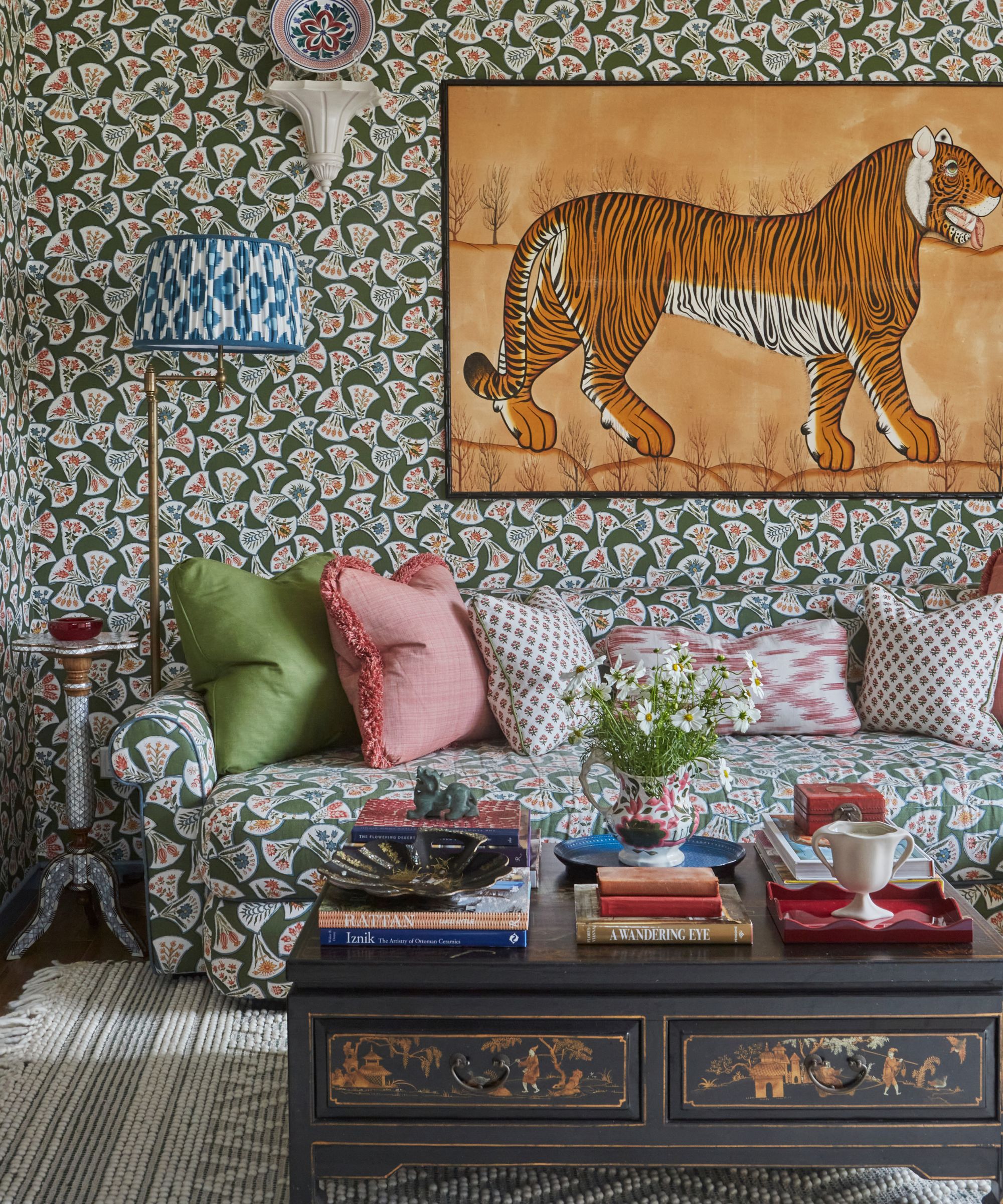
'As well as the scale and type of pattern, it is also about you use,' fabric designer Charlotte Gaisford explains. 'You may have a room full of stripes or a geometric pattern, and then you add in a highlight ditsy floral pattern, such as a cushion on the bed; it all looks great. You have used the traditional pattern as the highlight in the room, and it isn’t taking over. It has turned into the focal point or the lipstick of the room. The room will overall feel modern and geometric, but the highlight cushion brings in the traditional and organic pattern.'
'If you added a modern stripe and a ditsy floral pattern and had 50% of each thing, then it would fight together. If you apply the 60-30-10 rule, then it all works well together. This rule is usually applied to paint colors, but you can use it for fabrics. Use two geometrics for the 60-30, and then 10% for the traditional, and vice versa.'
The secret to mixing 'old' and 'new' prints is finding similarities between your pieces to create a cohesive, yet eclectic look.
'When layering modern and traditional patterns, I make sure the colors are complementary and the patterns have a similar movement,' says textile and wallpaper designer Samantha Sanata. 'Similarly, I think it is important to have natural elements in the space to help ground the room (such as woods, stone elements, ceramics), and for the patterns to have differing scales (one smaller, or one oversized).'
Love beautiful design ideas, expert advice, and inspiring decor trends? Sign up for our newsletter and get the latest features delivered straight to your inbox.